Bioactive Products



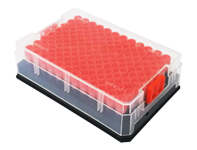
| A unique collection of 60 Toxicity natural compounds for screening | ||
| Catalog No: | Bb201 | Toxicity Compound Library Screening Details |
| Size: | 1mg/well * 60 Compounds 2mg/well * 60 Compounds | |
| Cat. No. | Information |
| CFN92862 | 3-O-(2'E ,4'Z-decadienoyl)-20-deoxyingenol 3-O-(2'E ,4'Z-decadienoyl)-20-deoxyingenol, one toxic terpenoid from raw Gansui. It has strong cytotoxicity against human normal cell lines L-O2 and GES-1 with dose-dependent relationships. |
| CFN92863 | Kansuinine A Kansuinine A possesses analgesic props, it also shows NGF inducing activity. |
| CFN92864 | 3-O-(2'E ,4'Z-decadienoyl)-20-O-acetylingenol 3-O-(2′E,4′Z-decadienoyl)-20-O-acetylingenol, one toxic terpenoid from raw Gansui. It has strong cytotoxicity against human normal cell lines L-O2 and GES-1 with dose-dependent relationships . It shows antinematodal activity against the nematode, Bursaphelenchus xylophilus, at a minimum effective dose (MED) of 5 microg/cotton ball. 3-O-(2'E,4'Z-decadienoyl)-20-O-acetylingenol induces the cytotoxicity of intestinal epithelial cells of rats (IEC-6 cells) depends on induction of cell apoptosis via mitochondrial pathway and cell cycle arrest.3-O-(2'E,4'Z-decadienoyl)-20-O-acetylingenol, kansuinine B and kansuinine A can markedly promote SPL proliferation and NO production by PMphi at concentrations from 0.78 to 12.50 microg/mL, hence the they are believed to be important proinflammatory components of the roots of E. kansui. |
| CFN92866 | Kansuinine B Kansuinine B shows cytotoxic ,and analgesic activities, treatment with kansuinine B and kansuinine A represents a novel method to block the IL-6-induced effects. |
| CFN92867 | 3-O-(2'E,4'Z-Decadienoyl)ingenol Kansuiphorin C and 3-O-(2′E,4′Z-decadienoyl)-ingenol exhibit significant anticomplement activity with respective 50% inhibitory concentration values of 44.1±3.8 and 89.5±5.5 uM. 20-O-acetyl-[3-O-(2'E,4'Z)-decadienoyl]-ingenol and 3-O-(2'E,4'Z)-decadienoylingenol show the same antinematodal activity against the nematode, Bursaphelenchus xylophilus, at a minimum effective dose (MED) of 5 microg/cotton ball. |

